
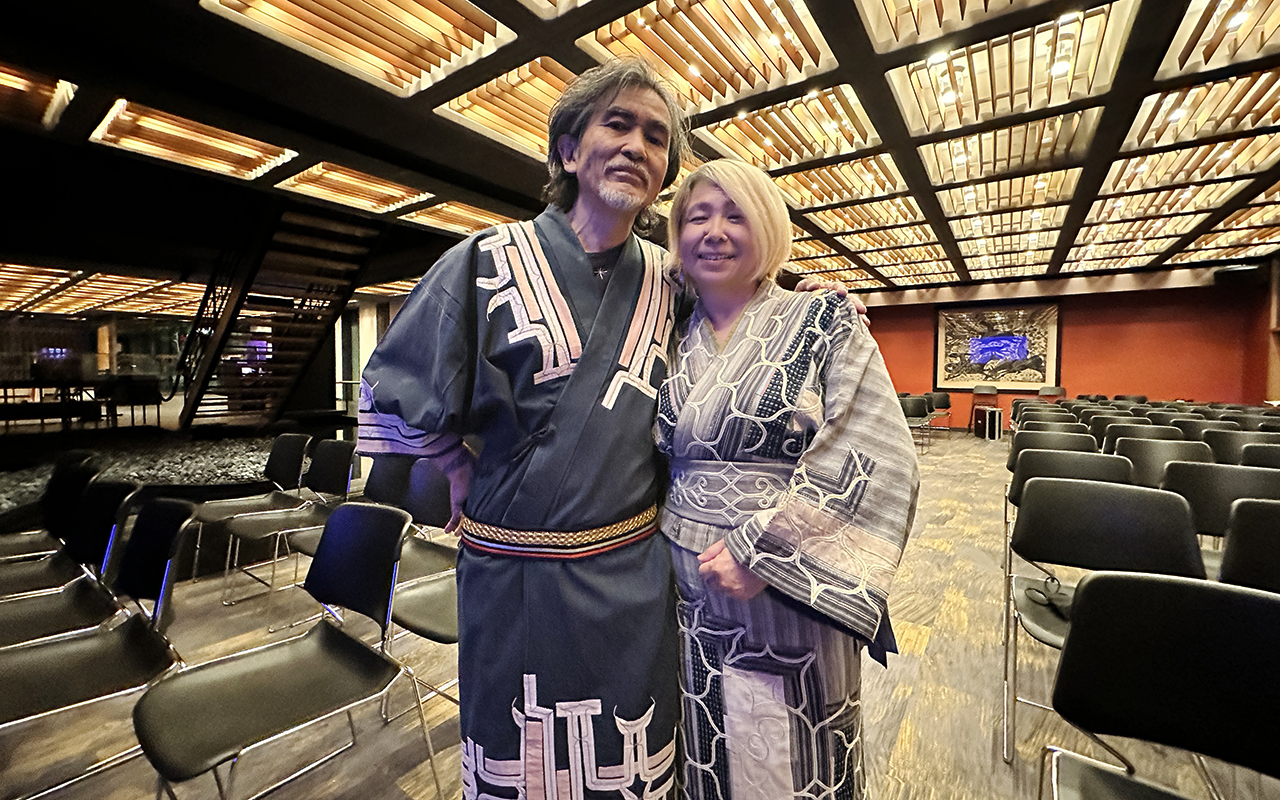
Five Strings Connecting Past and Future
Few people in Japan would recognise the instrument at first glance. Long and slender, carved from wood and strung with just five strings, the TONKORI has little of the ornament often associated with traditional Japanese instruments. Its appearance is almost austere. Yet the sound it produces is delicate, intimate and quietly arresting.
On a June evening in 2026, that sound filled the auditorium of Japan Society in New York. The audience fell silent. Not because they recognised the instrument — few of them did — but because something in its voice felt strangely familiar. It carried the air of a distant landscape while speaking in a language that required no translation. Curiosity slowly replaced surprise. What was this instrument? Who was the musician playing it?
At the centre of the stage sat OKI Kano (OKI DUB AINU BAND), the artist widely credited with bringing the TONKORI — the traditional five-string instrument of the Sakhalin Ainu — into contemporary music.
Over the past three decades, OKI has introduced the instrument to audiences around the world, blending its distinctive voice with reggae, dub and blues while performing at international festivals including WOMAD.
Yet when I sat down to interview him, festivals, recognition and reputation quickly fell into the background. One question remained. Why had this musician devoted more than 30 years to a single instrument? The answer, I would discover, had little to do with simply preserving tradition.
Where the Journey Began
In 1987, OKI moved to New York to work in film special effects. Some years later, during a visit to Asahikawa in Hokkaido, he encountered the TONKORI for the first time. Few people were still able to play it. Working from old recordings and scattered historical materials, he taught himself the instrument, eventually taking it onto stages around the world. What drew him to the TONKORI, however, was not a desire to rescue a disappearing culture.
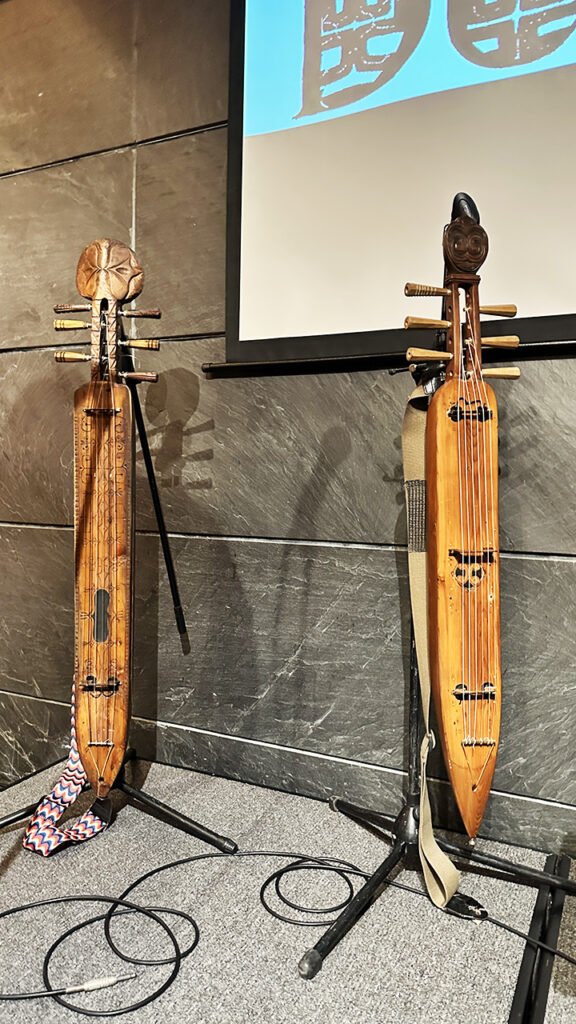
“I’d always loved blues, reggae and dub,” he told me. “Around the time I turned 20, I learned that I was Ainu. I was still trying to come to terms with that. Then I found myself wanting to understand this instrument.” He paused before continuing.
“When you start learning about an instrument, you begin meeting people. Once you get to know the people, you begin learning about the place they come from. Before long, every melody becomes more than music — it becomes a journey through memory, landscapes and the lives of the people who came before you.”
It was perhaps the most revealing sentence of the interview. The journey had not really begun with music. The instrument led him to people. People led him to place. Place led him to history. Listening to him, I realised that the TONKORI was not simply a musical instrument. It had become a way of reconnecting with memories in danger of fading away. That is what gives OKI’s music its unusual depth. It does not recreate the past. It allows the past to keep speaking.
Tradition in Motion
“Preserving tradition” is a phrase we often hear. It is also an incomplete one. Preservation can suggest protecting something from change — placing it safely behind glass, where time can no longer reach it. OKI sees culture differently. The TONKORI meets reggae. It meets dub. It enters conversations its original makers could never have imagined.
Some call that innovation. He does not. “I don’t think what I’m doing is revolutionary,” he said with a quiet smile. “There were always Ainu people trying something new. Someone must have decided to replace strings made from animal tendon with another material because it produced a better sound. That’s what culture is.”
To him, change is not the opposite of tradition. It is part of tradition. The distinction is subtle but important. There is a difference between preserving a culture and allowing it to remain alive. Culture does not survive because it is carefully protected. It survives because someone continues to play. Someone else chooses to listen. And another generation discovers something of its own within it. Perhaps that is why the sound of the TONKORI continues to travel far beyond Hokkaido. It was never meant to remain inside a museum.
Keeping, Changing, Carrying On
There is another voice at the heart of this story. Her name is Rekpo. As the lead singer of MAREWREW, she performs upopo — traditional Ainu songs passed down through generations. She is also OKI’s wife, though her relationship with tradition could hardly be more different.

“I sing only traditional songs,” she told me. “I don’t change them. I don’t add myself to them. I simply sing what has been handed down.” The songs of the Asahikawa tradition carry distinctive vocal techniques and regional variations, each preserving a different thread of memory. “The Ainu have so many truly beautiful songs” she said, laughing softly. “There isn’t even time to think about writing new ones.”
Listening to Rekpo, I found myself thinking again about OKI. One protects songs exactly as they have been inherited. The other allows an old instrument to enter new musical worlds. At first glance, they seem to be moving in opposite directions. In reality, they are travelling toward the same destination. Neither is trying to define Ainu culture. Each, in a different way, is ensuring that it continues to breathe.
Culture Needs More Than Preservation
Our conversation eventually moved beyond music. It turned instead to younger generations — and to the future. OKI spoke not only as a musician but also as the founder of his independent label, Chikar Studio, and as someone who has spent decades creating opportunities rather than waiting for them.
“I want young Ainu people to speak with their own voices,” he said. Then he paused.
“What this generation needs isn’t only the ability to play music, dance or learn the language. They need the ability to produce themselves.” He was not rejecting public support or cultural funding. He was talking about independence. About learning how to create something, present it to the world and take responsibility for its future.
As I listened, it struck me that his words reached far beyond the Ainu community. They could apply just as easily to an independent designer in Brooklyn, traditional Japanese ceramic Mashiko-yaki potters, and family-run factories in rural America. Culture rarely survives on goodwill alone. Someone has to choose to carry it forward.
Finding One’s Own Voice

Perhaps nowhere is that idea more visible than in the next generation. OKI’s son, Manaw Kano, grew up surrounded by the sound of the TONKORI. He continues to perform across a range of musical projects, including as a drummer for reggae band ASOUND (which entered hiatus in March this year) and OKI DUB AINU BAND.
When I asked Rekpo about him, she answered with a sentence that stayed with me. “For him, being Ainu is something that still lies ahead.”
It is a remarkable thought. We often imagine culture being passed neatly from parent to child. Life is rarely so straightforward. People leave home. They build lives of their own. Only later do many return to the questions they once left behind. Perhaps that is the moment when heritage stops being an obligation and becomes a personal choice. OKI understands this well.
“Every artist has to discover something that belongs only to them,” he said.
He spoke of Jean-Michel Basquiat and Keith Haring — not because they rejected tradition but because they created something unmistakably their own. That is something Oki himself has continued to do, and it is what he hopes for his son. Not another OKI. Simply Manaw.
A Universal Story
When the interview ended, I realised that what stayed with me was not only a lesson about Ainu culture. It was a question. How does any culture continue? Languages disappear. Festivals lose participants. Craft traditions struggle to find successors. Family businesses quietly come to an end. The challenge is not unique to Japan. Nor is it unique to the Ainu.
Later that evening, after the talk, two local high school students approached OKI. They had been studying endangered languages and wanted to learn more about Ainu. He listened carefully before replying. “I know someone who can explain it better than I can.” It was a brief exchange. Yet it revealed something essential. Rather than placing himself at the centre of the conversation, he opened a door to someone else. Culture, I realised, is rarely sustained by a single person. It survives because knowledge continues to move — from one hand to another, from one generation to the next.
Beyond the Museum
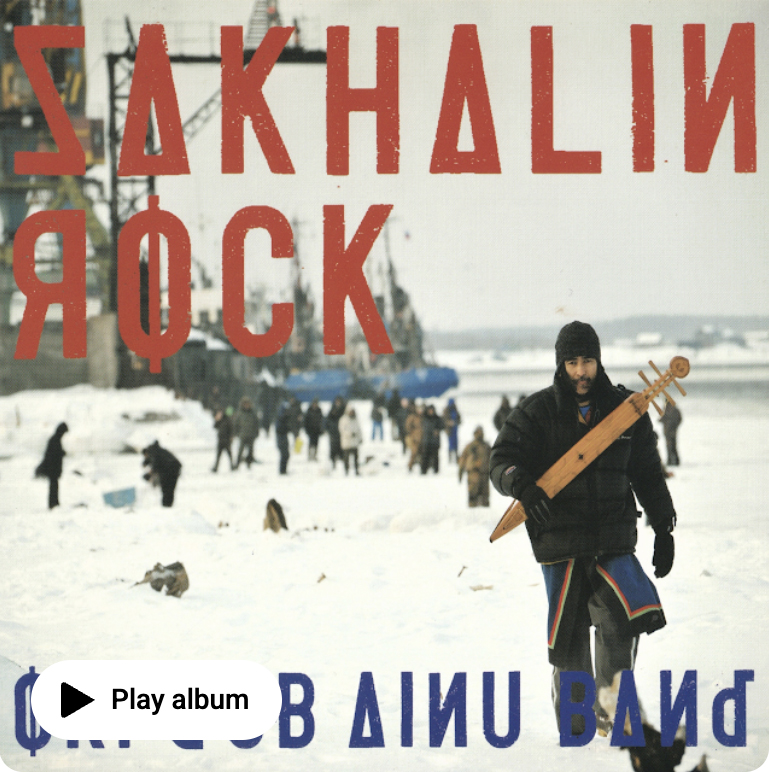
By the time the audience stepped back onto the streets of New York, the concert itself was over. What remained was not simply the memory of a performance include one of their signature songs ” Sakhalin Rock”. It was curiosity.
On their way home, some may have searched for the word TONKORI. Others may have read about the Ainu for the first time. Still others may have found themselves thinking about traditions much closer to home — customs, languages or family histories they had almost forgotten. Culture does not endure because it is preserved behind glass.
It endures because someone becomes curious enough to ask a question. Because someone chooses to listen. Because someone decides the story is worth carrying forward. The sound of the TONKORI is not an echo of the past. It is a conversation with the future. And perhaps that is why its five strings continue to resonate long after the music itself has faded.